Exploring the Milk-Clotting Activity and Leather Industry of Agave americana Serine Protease (PAA)
Marwa Bouhlel, Faical Brini and Walid Saibi*
DOI10.36648/2471-8084.21.7.103
Biotechnology and Plant Improvement Laboratory, Centre of Biotechnology of Sfax, University of Sfax, Sfax-Tunisia
- Corresponding Author:
- Walid Saibi
Biotechnology and Plant Improvement Laboratory
Centre of Biotechnology of Sfax
University of Sfax, Sfax-Tunisia
Tel: +216 96 27 10 05
E-mail: saibiwalid@gmail.com
Received Date: February 27, 2021; Accepted Date: March 06, 2021; Published Date: March 12, 2021
Citation: Bouhlel M, Brini F, Saibi W (2021) Exploring the Milk-Clotting Activity and Leather Industry of Agave americana Serine Protease (PAA). Biochem Mol Biol Vol.7 No.3:15
Abstract
Proteases are hydrolytic biocatalysts that catalyze peptide linkage/cleavage reactions at the level of proteins and peptides with different degrees of specificity. The serine proteases are the most commercially available enzyme in the world market and are researched for their industrial uses. We report here the extraction, the biochemical characterization of a novel serine protease with milk-clotting and Leather activities (named PAA) from Agave americana. Indeed, PAA was purified at homogeneity after three purification steps involving ammonium sulfate precipitation at 80%, ethanol fractionation and finally, gel filtration coupled to HPLC system. Their optimal activity was showed at 60°C and 7.8 units of pH. PAA has an apparent molecular weight of approximately 35 kDa estimated by sodium dodecyl sulfate polyacrylamide gel electrophoresis and size exclusion chromatography. In addition, the PAA irreversible inhibition by the Diisopropyl-Fluoro-Phosphate and the Phenyl-Methyl-Sulfonyl-Fluoride proves it’s belonging to the serine protease family. In another hand, the PAA autodigestion level is estimated to 20% after 30 days of self-incubation, the hydrolysis percentage of casein with PAA is about 22.9%, their efficiency in milk-clotting will lead to their plausible applied in various biotechnological tools related to agrofood industries. Also, the PAA proves an excellent capability in Leather Industry.
Keywords
Agave americana; Biotechnological tools; Leather industry; Dairy industry; Milk-clotting
Introduction
Biocatalysts are fascinating the researchers owing to their enormous power of catalysis and eco-friendly nature [1-3]. It is crucial to note that in biotechnological processes, the diversity of phytometabolites is now studied and different metabolic reactions are entitled a potential repository encoding valuable production of desirable products [4-9]. Since community demands are largely increasing, a continuous need to evolve biocatalysts is notably requested. Indeed, biocatalysts are used in diver’s environmental-friendly industrial goals [3,10,11], as they are efficient and selective and also accelerating catalytic reaction scene through the reduction of the reaction activation energy [1-3,12,13]. Hence, the field of phytotechnology has gained momentum and it is one of the key areas across the globe. In the last few past years, it has been found that most of the work has been focused on increasing the yield and the application facets [1,2,7,8,14].
Proteases, as multifunctional biocatalysts, play key roles in controlling a wide variety of cellular and extracellular processes in plants [4,9,12]. In this case we can include protein degradation and processing [6], germination and responses to some of environmental stimuli [12,15-17]. Proteases account for approximately 60% of global markets for enzymes, with a quite wide range of applications in food, detergence and pharmaceutical industries [1,12,15,18,19]. In addition, most plant proteases are active over wide ranges of temperatures, pH, surfactants, solvents and denaturing agents [12,20]. Therefore, scientists have directed their research for investigation so exploration of this type of biocatalysts [21,22]. Moreover, a large variety of proteases are used in detergent industry due to their good performance in cleaning the spots and dirt [23]. They have also been utilized in many food applications including meat tenderization, bakery, and preparation of protein hydrolysates. More importantly, they have been used in dairy industry for cheese manufacturing, where they destabilize casein micelles and stimulate milk-clotting, as the main step for cheese production [1].
Part of the proteolytic enzymes group, keratinases (EC 3.4.21), catalyze the hydrolysis of keratins. These are recognized for their high stability and tightly packed protein structures through disulfide and hydrogen bonds. As a consequence, they are extremely resistant to proteolytic breakdown with trypsin, papain, or pepsin. These enzymes made a focal point of interest for many investigations thanks to broaden their industrial uses, e.g., in agro-chemistry, food industry, or tannery. Nowadays, the growth of worldwide poultry industry is producing millions of tons of feathers. Presently, feather is converted into feather meal by chemical handling and/or steam pressure. This process is critical for the substrate, due to the destruction of thermo-labile amino acids [19,24].
Agave strain is considered as one of the plant that have actually appeared as a plausible attractive lignocellulosic biomasses that were used as a tools for textile compounds, biofuels and some other chemical products [3,11,25]. Agave species owes its importance to its large capacity to resist against abiotic stresses such as drought [8,25-27]. Also, agave strains have the capability to grown on the arid and semi-arid lands that are not suitable for other plants and in general other lignocellulosic biomasses [8,27,28]. Agave grown in semi-arid regions like Brazil, Australia and Africa ones [29]. Beyond these futures, the described strain offers such ecological enjoyments like limiting the desertification process of dry lands and removing the heavy metals from water surrounding mines [7,8,29]. In another hand, Agave americana was known as a medicinal plant that used in various traditional treatments [7,8,30,31].
It is also important to add that measuring the chemical composition is basic to provide the plausible tools. Concerning the agave strains, one of the earlier compositional investigations meaning acid hydrolysis methods [32] showed that A. lechuguilla contained low level of cellulose, hemicelluloses and lignin on a dry basis [32]. These low levels would suggest that agave would suffer from the lower amount of sugars and some products that could be derived from them. However, several more recent findings reported the fact that compositions are more attractive as a biofuels feedstock [29]. The analytical methods applied to estimate cellulose and hemicellulose amounts varied considerably, making it challenging to compare compositions of agave strains and the affiliated ones (data not showed). On the other hand, the enzymatic potential of Agave americana was studied for plausible use in various fields. Indeed, the protease activity may be used as bioadditive in detergency. Among these plausible applied tools, we look for the exploration of Agave americana abilities in the food industries, specially that in the dairy industries.
Eventually, we report in this work the extraction, purification and biochemical characterization of the Agave americana protease called PAA. These investigations should provide a better understanding of the potential of agave in certain interesting biotechnological. According to the last point, the PAA activity has been monitored in the milk coagulation. This fact is positively judged. Samely, PAA is also positively judged for their useful plausibility in leather industry.
Materials and Methods
Biological material
The leaves of Agave americana were obtained from Jilma State (35° 16 'North, 9° 25’ East, Sidi Bouzid-Tunisia), washed to remove dirty and impurities crushed in an automated boyar and kept in the oven to be used during the aqueous extractions. We note that the plant material was identified under an Accession Number of (2016-1895*A) [8,27].
Safety
Acrylamide is a potent neurotoxin and carcinogen, and it was handled with safety gloves. The handling of TCA was done carefully because of their highly corrosive nature to skin. All other experiments were carried out with the utmost precaution and care.
The protein concentration and electrophoresis
The protein sample content obtained during these studies was assessed using the Bradford assay. BSA was used as standard for this assessment [33]. Sodium dodecyl sulfate-polyacrylamide gel electrophoresis (SDS-PAGE) was carried out on 10% separating gel and 5% stacking gel to determine the purity and the molecular weight of the enzyme. The gel was stained with Coomassie brilliant blue R-250 and destained in a solution composed by 10% acetic acid and 20% of absolute ethanol [34].
Extraction and purification steps of PAA
First of all, the Agave americana leaves were washed to remove dirts and impurities. Afterwards, the crude extract was prepared as follows: 1 Kg of Agave americana leaves was emerged in 1500 mL Tris-HCl buffer (25 mmol L−1, pH 7.8) and incubated overnight at 4°C, in presence of CaCl2 used as an activity stabilizator. After homogenization, the mixture was centrifuged at 6000 rpm for 15 min at 4°C. Finally, the supernatant was filtered through the filter paper (150 mm, 5B, Advantec Tokyo, Japan) to obtain the crude extract. Three principal steps were carried to obtain the purified PAA such as ammonium sulfate precipitation at the level of 80%, ethanol fractionation and finally gel filtration coupled to HPLC system (Agilent, Zorbax PSM300 (3-300), 6.2 × 250 mm).
Biochemical characterization of PAA
Enzyme assays: The protease activity was determined as followed; the appropriate dilution from the leave juice (25 μL) was mixed with (475 μL Tris-HCl 100 mM) and casein solution (500 μL), used as substrate at the concentration of 1%. The mixed reaction was incubated for 15 min at 60°C. 500 μL of TCA was added to stop the proteolysis process. Then, the centrifuged mixture absorbency was determined at 280 nm [1,12,35].
Effect of the casein concentration on PAA activity: The PAA activity assay was determined using various substrate concentrations (casein was used as the substrate) ranging from 0.5 to 3%.
Effect of pH on PAA activity: As indicated in [36,37], the PAA activity optimal pH is determined at various pH values varied from 3 to 11 units using different buffers at 0.1 M (pH 3–5: sodium– acetate buffer; pH 6-7: phosphate (KH2PO4/K2HPO4) buffer; pH 8: Tris-HCl buffer; pH 9–11: glycine–NaOH buffer).
The PAA behavior against temperature treatments: PAA activity was monitored as followed in [36,37] at various temperatures varied from 0°C to 85°C in 0.1 M Tris-HCl buffer at pH 7,8. The thermostability was assessed by incubating the purified enzyme at 60°C for a various time intervals.
Effect of ionic strength (I) on PAA activity: PAA activity was determined at different buffer molarities ranged from 50 mM to 1 M. The ionic strength was determined according to the equation as followed: I= (1/2) ΣCizi2; with Ci and zi are the molarity and the ion charge, respectively [38].
Effect of metallic ions on PAA activity: The influence of various metallic ions on PAA activity was studied by incubating the purified enzyme with casein as substrate at 60°C for 15 min in presence of the metallic ion solutions at the concentration of 5 mM. After that the PAA relative activity was monitored as indicated in the enzyme assays section.
Effect of inhibitors on PAA activity: The effect of protease inhibitors on the PAA activity was studied. Indeed, the inhibitors used were Benzamidine, Iodoacétamide (IAA), Phenyl-Methyl- Sulfonyl-Fluoride (PMSF), Ethylene-diamine-tetraacetic acid (EDTA). A control assay of the enzyme activity was done without inhibitors and the resulting activity was taken as 100%. The purified PAA was incubated with an inhibitor for 30 min at room temperature and an aliquot was used for the activity measurement. The assay was done as described above.
Auto-digestion: Proteases, in general, are prone to autodigestion and the extent of autolysis depends on the enzyme concentration, pH and temperature level. For this, various PAA amounts ranged from 1% to 10% were incubated with 50 mM Tris–HCl pH 7.8 at room temperature. An aliquot containing 5 μg of enzyme was used for the determination of protease activity after 1, 7, 15, 20, 30 and 60 days of incubation, as described earlier with casein used as substrate. PAA activity after the first 10 min of activation was taken as 100% for the calculation of the residual activities.
Assay for milk-clotting activity: Milk-clotting activity was determined according to the methods described by Otani, Matsumori, and Hosono (1991) with slight modification. The substrate (10% skimmed milk in 0.01 M CaCl2) was prepared and the pH was adjusted to 7.8. The substrate (2 mL) was preincubated for 5 min at 37°C, and 0.2 mL of enzyme extract was added, and the curd formation was observed while manually rotating the test tube occasionally. The end-point was recorded when discrete particles were discernible. One milk-clotting unit was defined as the amount of enzyme that clots 10 mL of the substrate in 30 min. Milk-clotting activity was defined as MCA (units) = 2400/T × S/E
T = Time necessary for the curd fragment formation (s);
S = Volume of substrate solution (2 mL) and
E = Volume of enzyme solution (0.2 mL).
Assessment of PAA hydrolysis degree: Casein hydrolysis was carried out at 60°C and pH 7.8; so, an amount of 5 g of casein was dissolved in 100 mL of 100 mM Tris-HCl buffer and then treated with 500 U of PAA. The degree of hydrolysis (DH) was calculated based on the amount of base (NaOH) added so that the pH remains constant during hydrolysis. The DH is defined as the percentage of peptide bonds cleaved according to the total number of peptide bonds, i.e., it is the ratio of free amino-acids to those in peptide linkage and the relative size of the peptide fragments [36]. By totally decomposing the protein into its constituent elements, this degree of hydrolysis is estimated to be 100%. Since enzymes are specific biocatalysts, no enzyme alone is capable of hydrolyzing each peptide bond of a protein up to 100% DH. Indeed, the DH of an enzyme provides us with an idea of its functionality. Hydrolysis helped to keep the pH titrimetrically constant by using the pH-Stat (Metrohm 718 Stat Titrino, Herisau, Switzerland) set at the desired pH value of each enzyme via constantly adding 5 N of NaOH (caustic soda)
Assay for potential use in leather industry: The pieces of the sheepskin were put in contact with the PAA fraction as well as with pieces of Americana agave leaves at 40°C for 24 hours and subsequently the effects on the pieces of the skin of sheep were photographed.
Statistical analysis
Data were analyzed using one-way analysis of variance and treatment mean separations were performed using Duncan’s multiple range tests at the 5% level of significance [39].
Results and Discussion
Extraction and purification steps of the PAA
We note that the extraction method adopted for the crude extract and the biochemical characterization were realized as followed in the experimental section. Indeed, after washing the Agave leaves due to remove dirts and impurities, the crude protein extract was prepared by incubating 1 Kg of Agave leaves in 1500 mL Tris-HCl buffer overnight at 4°C, in presence of CaCl2 used as stabilizator of the activity. After homogenization, the mixture was centrifuged at 6000 rpm giving rise to the supernatant witch was filtered through the filter paper (150 mm, 5B, Advantec Tokyo, Japan) to obtain the crude extract. The last one was used for ammonium sulfate precipitation at the level of 80%. The second purification step consists on the ethanol fractionation as indicated also in the experimental section that gives birth to the protein fraction with protease activity. The last one was used for gel filtration step that was coupled to HPLC system. Hence, Figure 1 and Figure 2A illustrate the result of the injection of the active fraction from the second step (ethanol fractionation) and the active eluted fraction from the last one. Based on the elution time of the active protease fraction and also the standard molecular weight marker ones (Figure 2A), the apparent molecular weight of the purified PAA is estimated to 35 kDa. This fact is confirmed using SDS-PAGE as arised in Figure 2B.
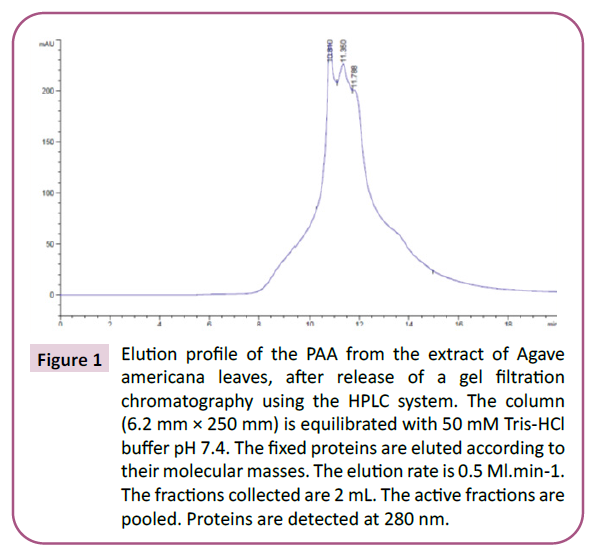
Figure 1: Elution profile of the PAA from the extract of Agave americana leaves, after release of a gel filtration chromatography using the HPLC system. The column (6.2 mm × 250 mm) is equilibrated with 50 mM Tris-HCl buffer pH 7.4. The fixed proteins are eluted according to their molecular masses. The elution rate is 0.5 Ml.min-1. The fractions collected are 2 mL. The active fractions are pooled. Proteins are detected at 280nm.
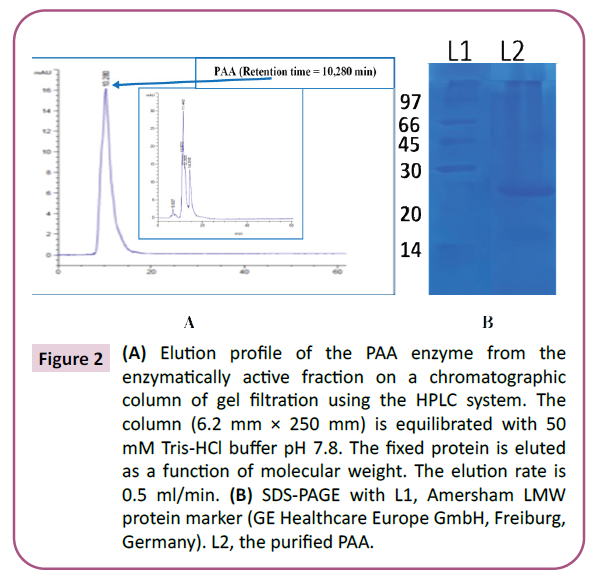
Figure 2: (A) Elution profile of the PAA enzyme from the enzymatically active fraction on a chromatographic column of gel filtration using the HPLC system. The column (6.2 mm × 250 mm) is equilibrated with 50mM Tris-HCl buffer pH 7.8. The fixed protein is eluted as a function of molecular weight. The elution rate is 0.5 ml/min. (B) SDS-PAGE with L1, Amersham LMW protein marker (GE Healthcare Europe GmbH, Freiburg, Germany). L2, the purified PAA.
Biochemical characterization of the PAA
Effect of the casein concentration on the PAA activity: As a prerequisite to biochemical characterization, we determined the more suitable concentration of substrate in the enzymatic assay. The PAA activity was therefore measured using different substrate concentrations ranged from 0.5 to 3%. Figure 3 shows that 1% of casein is the best one. A certain inhibition was observed when casein exceeded 1%. Such information would be useful during the determination of the kinetic parameters of the purified enzyme.
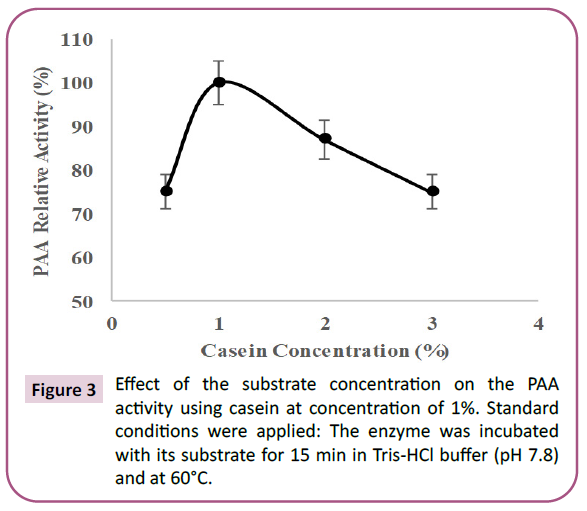
Figure 3: Effect of the substrate concentration on the PAA activity using casein at concentration of 1%. Standard conditions were applied: The enzyme was incubated with its substrate for 15 min in Tris-HCl buffer (pH 7.8) and at 60°C.
Effect of pH on the PAA activity and stability: The casein PAA hydrolysis reaction was carried out at pH ranging from 5 to 10 units. All buffers are used at concentrations of 100 mM and in the presence of 2 mM CaCl2. Residual activities are measured at the pH and temperature optimum conditions of the purified enzyme. Figure 4 shows that PAA optimal pH activity is about 7.8. At the same case PAA stability was studied giving rise to a good thermostability between 5 and 10 units of pH. This fact may be crucial and also very important if we looking for plausible biotechnological applications of the purified PAA.
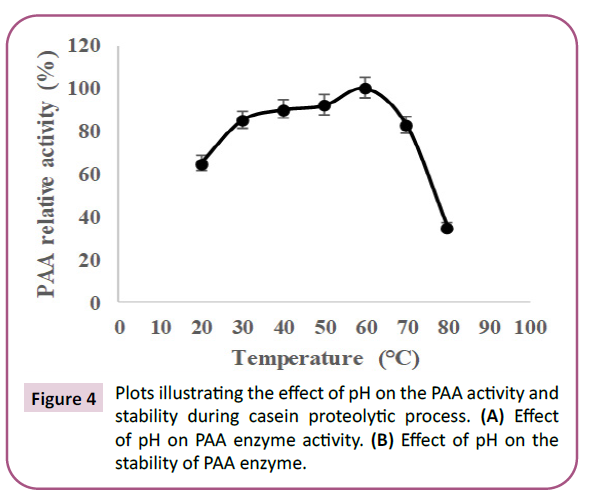
Figure 4: Plots illustrating the effect of pH on the PAA activity and stability during casein proteolytic process. (A) Effect of pH on PAA enzyme activity. (B) Effect of pH on the stability of PAA enzyme.
Effect of temperature on the PAA activity and stability: The reaction medium is maintained at an optimum pH value (7.8) and by varying the temperature from 20°C to 80°C. Figure 5 shows that PAA have an optimum temperature of 60°C. This fact is very important for the PAA plausible use in various biotechnological applications such as detergence industry.
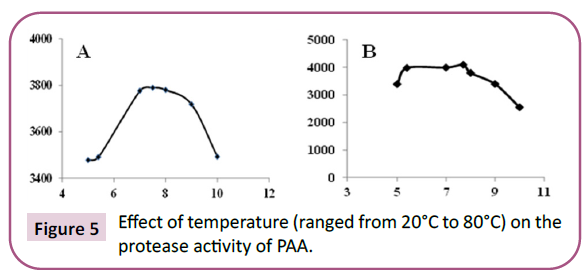
Figure 5: Effect of temperature (ranged from 20°C to 80°C) on the protease activity of PAA.
Effect of ionic strength on the PAA activity: The effect of the ionic strength on the PAA activity was tested at pH 7.8 and 60°C, at different Tris HCl concentrations ranged from 25 to 250 mM. Indeed, Figure 6 shows that the optimal activity was obtained with 100 mM Tris HCl buffer. This could be interpreted by the good stability of the enzyme under those conditions, which facilitate the plausible use of PAA as biotechnological tool.
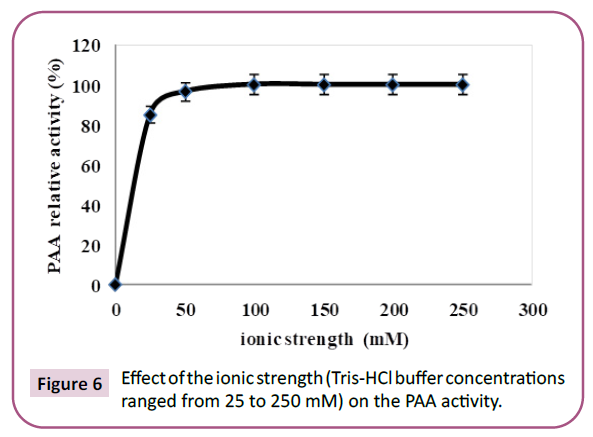
Figure 6: Effect of the ionic strength (Tris-HCl buffer concentrations ranged from 25 to 250 mM) on the PAA activity.
Study of metallic ions on PAA activity: To explore the effect of bivalent metallic ions on PAA activity, the last one was purified as previously described followed by an extensive dialysis against 100 mM Tris-HCl buffer containing 5 mM EDTA. The determination of EDTA-treated and the non-treated PAA activities showed that the enzyme has the same activities to be 104% and 100% at 60°C, respectively. In addition, Ca2+ (CaCl2), Fe2+ (FeSO4, 7H2O) and Li+ (LiCl) upgrade the PAA activity to 115%, 326% and 135% of residual activity, respectively (Table 1).
| Variables | PAA Relative Activity (%) |
|---|---|
| None | 100 |
| Ca2+ (CaCl2) | 115 |
| Mn2+ (MnCl2) | 97 |
| Mg2+ (MgCl2) | 90 |
| Zn2+ (ZnSO4) | 85 |
| CO2+ (COCl2) | 94 |
| Fe2+ (FeSO4, 7H2O) | 326 |
| Li+ (LiCl) | 135 |
| EDTA (2 mM) | 104 |
Table 1 Effect of some bivalent metalic ions (at 5 mM) on the activity of PAA purified from Agave americana.
Effect of protease-specific inhibitors on PAA activity: The PAA enzyme is incubated in the presence of various specific inhibitors for 30 min and at room temperature with an inhibitor / enzyme ratio equal to 100. The residual activities are measured at the optimum conditions of the enzyme. The protease inhibitors used are: phenylmethylsulphonyl fluoride (PMSF), Ethylene diamine tetraacetic acid (EDTA), benzamidine, Iodoacetamide. Table 2 indicates that PMSF and benzamidine decrease the PAA activity with residual activities of 2 and 10.5%, respectively. However, Iodoacetamide and EDTA haven’t an inhibitor effect on the PAA activity. Based on this fact, we conclude that PAA is a serine protease enzyme.
| Effectors | Inhibitor specificity | PAA Residual Activity (%) |
|---|---|---|
| None | ---- | 100 |
| EDTA (5 mM) | Metalloprotease inhibitor | 104 |
| PMSF (5 mM) | Specific serine-proteases inhibitor | 2 |
| Benzamidine (5 mM) | Competitive specific serine-protease inhibitor | 10.5 |
| Iodoacetamide (5 mM) | Cystein-proteases inhibitor | 96 |
Table 2 Effect of some inhibitors on the stability of the protease PAA purified from Agave americana (respecting a molar ratio inhibitor/ protease=100).
Auto digestion
The autodigestion of PAA was monitored at room temperature. In each case, the loss of activity was proportional to the incubation time. The enzyme retained more than 89% of the activity after 7 days of incubation and the loss of activity increased with the time of incubation from day 7 to day 15 as indicated in Figure 7. After 15 days of incubation and more, PAA conserves the same residual activity (80%) and an overall decrease in the residual activity after 60 days (Figure 7). Thus, PAA showed exceptionally high resistance to autodigestion. This, in turn, indicates its high stability, and thus its possible application in food, textile and biotechnological industries.
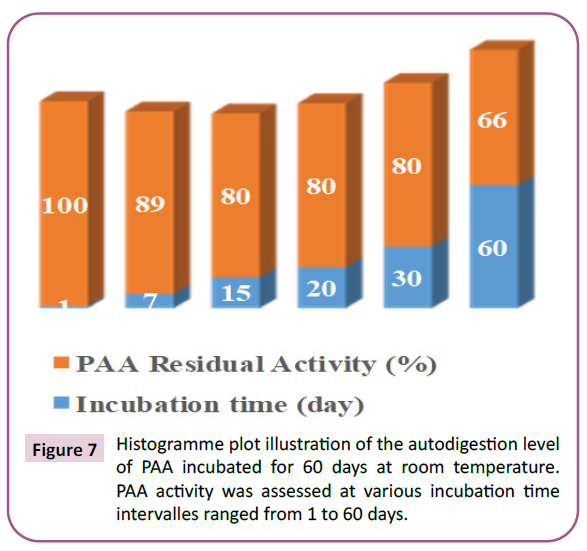
Figure 7: Histogramme plot illustration of the autodigestion level of PAA incubated for 60 days at room temperature. PAA activity was assessed at various incubation time intervalles ranged from 1 to 60 days.
Determination of PAA hydrolysis degree
Enzymatically hydrolyzed proteins possess functional properties, such as low viscosity, increased whipping ability and high solubility, which make them favorable for food industry uses. PAA is used at the same levels of activity for the production of protein hydrolysates from casein and for the subsequent comparisons of hydrolytic efficiencies. Indeed, the purified PAA was the most efficient, with 22.9% per comparison with Mucorpepsine (17%) as indicated in Table 3. This finding indicates that PAA can be usefully employed for the preparation of protein hydrolysates.
| Enzyme | DH (%) |
|---|---|
| PAA | 22,9 |
| Mucorpepsine | 17 |
Table 3 Evaluation of the PAA performance on the casein degradation among the determination of the hydrolysis degree per comparison with the Mucorpepsin one.
Milk-coagulation
The enzyme PAA strongly coagulated skimmed milk and formed a white and firm curd as indicated in Figure 8 in that T0 represented the non-treated milk sample and T1 represents the skimmed milk treated with the purified PAA fraction. The ratio of milk-clotting activity to proteolytic activity of PAA was determined. It was found that this ratio is estimated to 80%. The capacity of this protease to produce milk curds could make it useful as a new milk
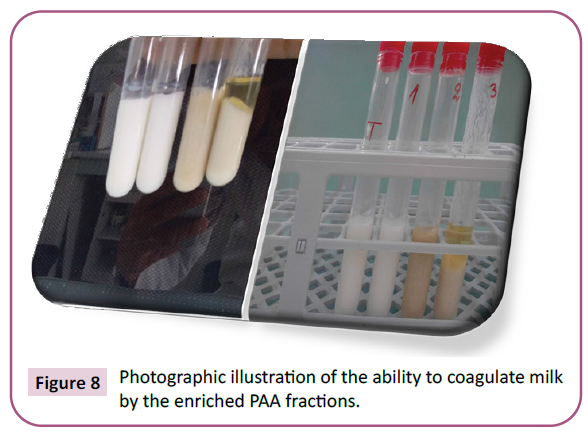
Figure 8: Photographic illustration of the ability to coagulate milk by the enriched PAA fractions.
PAA potential use in leather industry
The PAA arises the effectively removes wool from sheepskin showing potential application in the tannery industry to replace chemical treatment as indicated in Figure 9. Indeed, this plot indicates that the PAA fraction and the Agave americana leaves have a positive response in the leather application per comparison to the buffer.
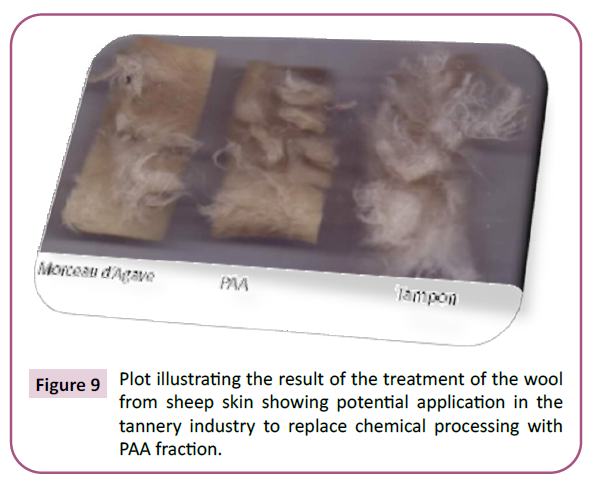
Figure 9: Plot illustrating the result of the treatment of the wool from sheep skin showing potential application in the tannery industry to replace chemical processing with PAA fraction.
Conclusion
Accordingly, a novel phyto-protease from Agave americana with a great industrial interest as a cleaning bioadditive in agrofood formulations and also in leather industry was purified to homogeneity. This is the first report pertaining to the biochemical characterization of a serine-protease (PAA), which is endowed with a number of properties that are highly valued for the milkclotting and leather industries. Further studies, some of which are currently underway in our laboratory, are needed to the hyperproduction of PAA for more investigations and also for their plausible use as efficient biotechnological tools.
Acknowledgment
This work was in part financially supported by a grant from the Tunisian Ministry of Higher Education and Scientific Research.
References
- Rekik H, Jaouadi NZ, Gargouri F, Bejar W, Frikha F, et al. (2019) Production, purification and biochemical characterization of a novel detergent-stable serine alkaline protease from Bacillus safensis strain RH12. Int J Biol Macromol 121: 1227-1239.
- Neifar S, Hlima HB, Mhiri S, Mezghani M, Bouacem K, et al. (2019) A novel thermostable and efficient class II glucose isomerase from the thermophilic Caldicoprobacter algeriensis: Biochemical characterization, molecular investigation, and application in high fructose syrup production. Int J Biol Macromol 129: 31-40.
- Saibi W (2015) Cellulases: suppliers of energy and basic compounds, so life. Int J Eng Res Sci 1: 27.
- Saibi W, Abdeljalil S, Masmoudi K, Gargouri A (2012) Biocatalysts: beautiful creatures. Biochem Biophy Res Comm 426: 289-293.
- Saibi W, Feki K, Yacoubi I, Brini F (2015) Bridging between proline structure, functions, metabolism, and involvement in organism physiology. Appl Biochem Biotechnol 176: 2107-2119.
- Saibi W, Gargouri A (2012) Cellobiose dehydrogenase influences the production of S. microspora ß-glucosidase. World J Microbiol Biotechnol 28: 23-29.
- Sahnoun M, Saibi W, Brini F, Bejar S (2018) Apigenin isolated from A. americana encodes Human and Aspergillus oryzae S2 a-amylase inhibitions: credible approach for antifungal and antidiabetic therapies. J Food Sci Technol 55: 1489-1498.
- Sahnoun M, Bejar S, Daoud L, Ayadi L, Brini F, et al. (2019) Effect of Agave americana L. on the human, and Aspergillus oryzae S2 a-amylase inhibitions. Nat Prod Res 33: 755-758.
- Gonzalez-Velazquez DA, Mazorra-Manzano MA, Martinez-Porchas M, Huerta-Ocampo JA, Vallejo-Cordoba B, et al. (2020) Exploring the Milk-Clotting and Proteolytic Activities in Different Tissues of Vallesia glabra: a New Source of Plant Proteolytic Enzymes. Appl Biochem Biotechnol pp: 1-16.
- Abdeljalil S, Saibi W, Ben Hmad I, Baklouti A, Ben Mahmoud F, et al. (2014) Improvement of cellulase and xylanase production by solid-state fermentation of S tachybotrys microspora. Biotechnol Appl Biochem 61: 432-440.
- Saibi W, Brini F, Hanin M, Masmoudi K (2013) Development of energy plants and their potential to withstand various extreme environments. Recent Pat DNA Gene Seq 7: 13-24.
- Saibi W, Zouari N, Masmoudi K, Brini F (2016) Role of the durum wheat dehydrin in the function of proteases conferring salinity tolerance in Arabidopsis thaliana transgenic lines. Int J Biol Macromol 85: 311-316.
- Abdeljalil S, Hmad IB, Saibi W, Amouri B, Maalej W, et al. (2014) Investigations on hydrolytic activities from Stachybotrys microspora and their use as an alternative in yeast DNA extraction. Appl Biochem Biotechnol 172: 1599-1611.
- Bouazzi H, Feki K, Zouari N, Sahnoun M, Brini F, et al. (2019) Causal Enzymology and Physiological Aspects May Be Accountable to Membrane Integrity in Response to Salt Stress in Arabidopsis thaliana Lines. BioMed Res Int.
- Bouazzi H, Feki K, Brini F, Saibi W (2019) Is duality between proline metabolic mutation (p5cs 1-4) and durum wheat dehydrin transgenic contexts a “pacemaker” for salt tolerance process in Arabidopsis thaliana? Acta Physiol Plant 41: 1-10.
- Saibi W, Feki K, Mahmoud RB, Brini F (2015) Durum wheat dehydrin (DHN-5) confers salinity tolerance to transgenic Arabidopsis plants through the regulation of proline metabolism and ROS scavenging system. Planta 242: 1187-1194.
- Kaouthar F, Ameny FK, Yosra K, Walid S, Ali G, et al. (2016) Responses of transgenic Arabidopsis plants and recombinant yeast cells expressing a novel durum wheat manganese superoxide dismutase TdMnSOD to various abiotic stresses. J Plant Physiol 198: 56-68.
- Hamiche S, Mechri S, Khelouia L, Annane R, El Hattab, et al. (2019) Purification and biochemical characterization of two keratinases from Bacillus amyloliquefaciens S13 isolated from marine brown alga Zonaria tournefortii with potential keratin-biodegradation and hide-unhairing activities. Int J Biol Macromol 122: 758-769.
- Rahem FZ, Badis A, Zenati B, Mechri S, Hadjidj R, et al. (2021) Characterization of a novel serine alkaline protease from Bacillus atrophaeus NIJ as a thermophilic hydrocarbonoclastic strain and its application in laundry detergent formulations. Alger J Environ Sci Tech 7.
- Asmani KL, Bouacem K, Ouelhadj A, Yahiaoui M, Bechami S, et al. (2020) Biochemical and molecular characterization of an acido-thermostable endo-chitinase from Bacillus altitudinis KA15 for industrial degradation of chitinous waste. Carb Res 495: 108089.
- Neifar A, Saibi W, Bradai MN, Abdelmouleh A, Gargouri A (2012) Investigations on tyrosinase activity in melanin-free ink from Sepia officinalis: Potential for food proteins cross-linking. Euro Food Res Tech 235: 611-618.
- Jabeur F, Mechri S, Kriaa M, Gharbi I, Bejaoui N, et al. (2020) Statistical experimental design optimization of microbial proteases production under co-culture conditions for chitin recovery from speckled shrimp Metapenaeus monoceros by-Product. Bio Med Res Int 2020.
- Rekik H, Frikha F, Jaouadi NZ, Gargouri F, Jmal N, et al. (2019) Gene cloning, expression, molecular modeling and docking study of the protease SAPRH from Bacillus safensis strain RH12. Int J Biol Macromol 125: 876-891.
- Elhoul MB, Jaouadi NZ, Bouacem K, Allala F, Rekik H, et al. (2020) Heterologous expression and purification of keratinase from Actinomadura viridilutea DZ50: Feather biodegradation and animal hide dehairing bioprocesses. Environ Sci Poll Res, pp: 1-14.
- Caspeta L, Caro-Bermudez MA, Ponce-Noyola T, Martinez A (2014) Enzymatic hydrolysis at high-solids loadings for the conversion of agave bagasse to fuel ethanol. Appl Ene 113: 277-286.
- Nunez HM, Rodriguez LF, Khanna M (2011) Agave for tequila and biofuels: an economic assessment and potential opportunities. Gcb Bioenergy 3: 43-57.
- Sahnoun M, Saibi W, Brini F, Bejar S (2018) Apigenin isolated from A americana encodes Human and Aspergillus oryzae S2 a-amylase inhibitions: credible approach for antifungal and antidiabetic therapies. J Food Sci Technol 55: 1489-1498.
- Somerville C, Youngs H, Taylor C, Davis SC, Long SP (2010) Feedstocks for lignocellulosic biofuels. Science 329: 790-792.
- Muthangya M, Chigodi MO, Samoei DK (2013) Phytochemical screening of Agave sisalana Perrine leaves (waste). Int J App Bio Pharm Technol 4: 200-204.
- Hooper L, Kroon PA, Rimm EB, Cohn JS, Harvey I, et al. (2008) Flavonoids, flavonoid-rich foods, and cardiovascular risk: A meta-analysis of randomized controlled trials. Am J Clin Nutr 88: 38-50.
- Li X, Lian LH, Bai T, Wu YL, Wan Y, et al. (2011) Cryptotanshinone inhibits LPS-induced proinflammatory mediators via TLR4 and TAK1 signaling pathway. Int Immunopharmacol 11: 1871-1876.
- Li H, Foston MB, Kumar R, Samuel R, Gao X, et al. (2012) Chemical composition and characterization of cellulose for Agave as a fast-growing, drought-tolerant biofuels feedstock. RSC Adv 2: 4951-4958.
- Bradford MM (1976) A rapid and sensitive method for the quantitation of microgram quantities of protein utilizing the principle of protein-dye binding. Anal Biochem 72: 248-254.
- Laemmli UK (1970) Cleavage of structural proteins during the assembly of the head of bacteriophage T4. Nature 227: 680-685.
- Habbeche A, Saoudi B, Jaouadi B, Haberra S, Kerouaz B, et al. (2014) Purification and biochemical characterization of a detergent-stable keratinase from a newly thermophilic actinomycete Actinomadura keratinilytica strain Cpt29 isolated from poultry compost. J Biosci Bioeng 117: 413-421.
- Saibi W, Gargouri A (2011) Purification and biochemical characterization of an atypical ß-glucosidase from Stachybotrys microspora. J Mol Cat B: Enzy 72: 107-115.
- Boudabbous M, Saibi W, Bouallagui Z, Dardouri M, Sayadi S, et al. (2017) Fast activated charcoal prepurification of Fusarium solani ß-glucosidase for an efficient oleuropein bioconversion. Prep Biochem Biotechnol 47: 185-191.
- Saibi W, Gargouri A (2013) Mastery of cultural conditions and physico-chemical properties improves the production and the catalytic efficiency of bglG. Appl Biochem Biotechnol 170: 1525-1532.
- Duncan DB (1957) Multiple range tests for correlated and heteroscedastic means. Biometrics 13: 164-176.
Open Access Journals
- Aquaculture & Veterinary Science
- Chemistry & Chemical Sciences
- Clinical Sciences
- Engineering
- General Science
- Genetics & Molecular Biology
- Health Care & Nursing
- Immunology & Microbiology
- Materials Science
- Mathematics & Physics
- Medical Sciences
- Neurology & Psychiatry
- Oncology & Cancer Science
- Pharmaceutical Sciences